Amniotic Membrane Graft Therapy for Wound Healing
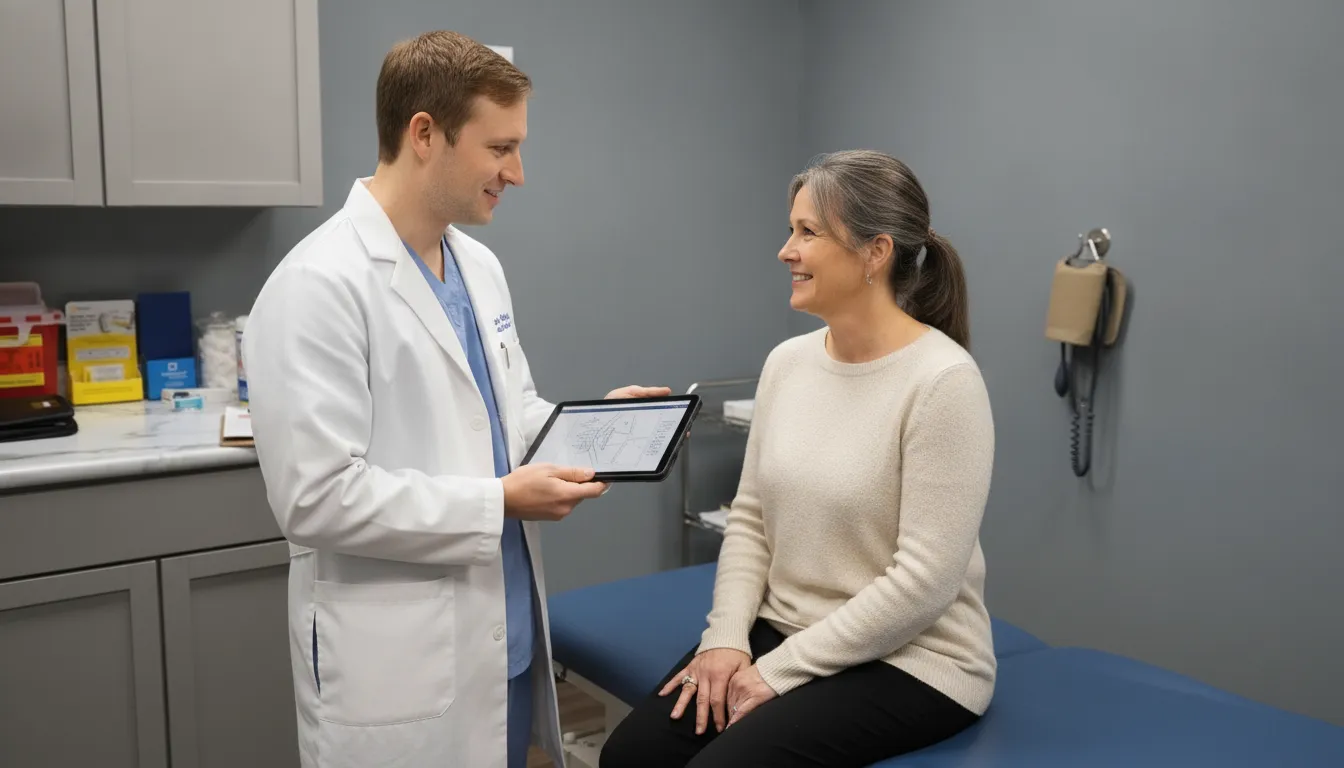
A wound that remains open or makes little progress can raise difficult questions for patients and caregivers. Amniotic membrane grafts are placental-tissue-derived materials used as a biologic scaffold in selected wound-care situations, alongside an individualized assessment and appropriate standard care.
Contact Nebraska Wellness Group to request an individualized wound-care evaluation and discuss whether this approach may fit your care plan.
Quick answer: Amniotic membrane graft therapy for wound healing may be considered when a chronic wound has stagnated or has not responded as expected to standard treatment. The graft contains collagen and growth factors, but it is not a guaranteed cure or a replacement for evaluating the wound and its contributing conditions.
Understanding what the graft is, how clinicians may use it, and how it differs from dressings can make the conversation more practical. Start with the material itself and its role in wound care.
What Is Amniotic Membrane Graft Therapy?
Amniotic membrane graft therapy uses tissue derived from the placenta as part of care for selected wounds that are slow to heal. Nebraska Wellness Group describes the graft as a biologic scaffold containing collagen and growth factors. In simple terms, the membrane provides a tissue-based material that can be placed as one component of a broader wound-care plan. It is not a promise that every wound will heal, and it does not replace a careful evaluation of the wound or the factors affecting the patient.
How is an amniotic membrane graft different from an autologous skin graft?
The word autologous means that tissue comes from the same person who receives it. An autologous skin graft therefore uses the patient’s own skin. An amniotic membrane graft is different in source: it uses placental tissue rather than skin taken from the patient’s body. The two terms should not be used interchangeably, even though both involve placing tissue or a tissue-based material in relation to a wound.
Amniotic membrane is a biologic material derived from the placenta. A clinical review in PMC8706466 discusses amniotic membrane derivatives in the context of chronic wound treatment. That review is part of the medical literature clinicians may consider when evaluating this category of therapy. But research findings do not determine whether a graft is appropriate for a particular person.
For a patient or caregiver, the most important distinction is that the graft is one option within individualized wound care, not a reason to skip diagnosis or follow-up. The care team considers the wound’s history and current condition before discussing available approaches. A discussion of amniotic membrane therapy should therefore focus on the person’s wound, overall health, and clinical goals rather than on a general promise of benefit.
Questions about whether this therapy fits a specific wound should be answered by a qualified clinician after assessment. The conversation may also include other wound-care approaches and attention to conditions that can affect healing. Understanding the source of the graft helps patients ask informed questions, while an individualized evaluation keeps the decision grounded in the patient’s actual needs.
How Does Amniotic Membrane Graft Therapy for Wound Healing Work?
Amniotic membrane graft therapy for wound healing is an adjunctive treatment, meaning it may be used alongside standard wound care rather than instead of it. The graft places a biologic membrane over a selected wound. In simple terms, it can provide a temporary framework at the wound surface while the care team continues addressing the conditions that may be slowing repair.
Researchers have studied amniotic membrane derivatives because chronic wounds can remain in a prolonged, difficult-to-heal state. A 2021 peer-reviewed review discusses these materials in the context of chronic-wound treatment. But a review is not proof that one product or approach will work for every patient. Suitability still depends on an in-person assessment of the wound, the person’s health, and the response to care already provided.
How is graft therapy used with standard care?
A graft does not remove the need for wound assessment, monitoring, protection, or other clinically appropriate measures. Standard care may continue while the team evaluates whether an adjunctive graft is reasonable. This matters because a wound is affected by more than its visible surface. Diabetes and other contributing conditions may need attention as part of the overall plan. Nebraska Wellness Group’s guidance emphasizes that graft therapy should remain part of coordinated wound treatment, not a replacement for standard care.
One clinical trial illustrates how researchers have evaluated this approach. The study included 80 people with chronic diabetic foot ulcers and, after a two-week screening period in which the ulcers had not responded to standard care, participants were assigned to standard care alone or standard care plus weekly dHACA, a dehydrated human amnion and chorion allograft, for up to 12 weeks. At 12 weeks, the study reported healing in 85% of ulcers in the dHACA group compared with 33% in the standard-care group. These findings are specific to that study population, treatment protocol, and follow-up period. They should not be read as a guarantee or as evidence that the same result applies to every wound.
Read the full clinical trial report for its methods and limitations. A wound-care clinician can explain whether evidence like this is relevant to an individual case.
Which Wounds May Be Considered for Amniotic Membrane Grafts?
Amniotic membrane grafts may be considered when a wound has remained stagnant or has not healed over a longer period. Nebraska Wellness Group describes this therapy as one option within a broader plan of care. It is not a guaranteed solution or a substitute for evaluating the wound and the person who has it. The goal of an individualized assessment is to understand the wound’s characteristics, healing progress, and possible contributing conditions before discussing whether a graft is appropriate.
Potential wound categories may include:
- Diabetic foot ulcers: Wounds on the foot that occur in the setting of diabetes may require attention to both the wound and diabetes-related factors.
- Venous stasis ulcers: These ulcers may be associated with problems affecting blood flow through the veins.
- Pressure ulcers: Areas exposed to prolonged pressure may be considered as part of a comprehensive wound evaluation.
- Non-healing surgical wounds: A surgical wound that is not progressing as expected may warrant reassessment and discussion of treatment options.
- Stagnant traumatic wounds: Some injuries may remain slow to heal and could be evaluated for advanced treatment options.
Does a wound category determine eligibility?
No. A wound’s category alone does not determine whether amniotic membrane graft therapy is appropriate. Clinical assessment is essential, and the care team may consider the wound’s current status, the person’s health, and how healing has progressed. Nebraska Wellness Group does not describe a universal eligibility checklist. So patients and caregivers should avoid assuming that a graft is suitable based only on a diagnosis or wound location.
Contributing conditions also matter. Nebraska Wellness Group emphasizes coordinating wound treatment with conditions such as diabetes, rather than addressing the wound in isolation. Patients may benefit from discussing both needs through diabetes care in Omaha and a wound-focused evaluation. To learn more about chronic wound care services, ask the clinical team how assessment, contributing conditions, and treatment options fit together. Outcomes vary, and only an individualized evaluation can guide the next step.
What Happens During Amniotic Membrane Graft Treatment?
Amniotic membrane graft treatment is planned around the wound and the person receiving care. The goal is not to replace wound assessment or standard care. Instead, application may be considered as one part of a broader plan for a stagnant or long-term non-healing wound. Nebraska Wellness Group describes the treatment as an option guided by clinical evaluation, rather than a guaranteed solution. The care team can explain the treatment setting and what to expect for a specific wound.
- Clinical assessment: The care team evaluates the wound and considers its history, current progress, and factors that may affect healing. This assessment helps determine whether an amniotic membrane graft is appropriate to discuss and how it fits with the rest of the treatment plan.
- Wound preparation as appropriate: The wound is prepared according to the clinician’s assessment and the needs of that individual wound. Preparation is not identical for every patient, so the care team can explain what is appropriate in a specific case.
- Application: When graft therapy is selected, the clinician places the graft as part of the wound-care plan. The care team can explain where treatment will take place and what the patient may feel. Patients should ask questions about how to communicate discomfort, rather than assuming every application will feel the same.
- Protection and ongoing care: After application, the wound continues to need protection and care as directed by the clinical team. Graft therapy does not automatically replace dressings, pressure management, or other elements of standard wound care. Follow the individualized instructions provided at the visit.
- Follow-up: The team reviews the wound’s response and adjusts the plan when needed. Application frequency varies with wound characteristics and clinical response. Some protocols use weekly applications, while others use biweekly intervals, so schedules vary with the wound and response and should not be assumed in advance.
How many visits will treatment require?
There is no fixed number of applications or universal timeline that applies to every wound. Follow-up decisions depend on the clinical assessment and how the wound responds. Ask the care team what signs they will monitor, what care is expected between visits, and when to contact the office with a concern. This keeps expectations realistic while preserving the flexibility needed for individualized wound care.
How Does Graft Therapy Compare With Standard Wound Dressings?
Standard wound care and graft therapy serve different roles, and a comparison does not mean that one automatically replaces the other. Dressings can protect the wound and support the care plan. Depending on the wound, the plan may also include products such as collagen, antimicrobial, or growth-factor dressings. Graft therapy may be considered when a wound has remained stagnant or has not healed as expected. The appropriate choice depends on an in-person assessment, the wound’s characteristics, and the factors affecting healing.
| Care consideration | Standard dressings and related care | Graft therapy |
|---|---|---|
| Role | Helps protect and manage the wound as part of an ongoing treatment plan. Products may include collagen, antimicrobial, or growth-factor dressings. | Adds a placental-tissue-derived scaffold to a selected wound-care plan, with the intent of supporting tissue regrowth. |
| When considered | May remain an important part of care throughout the healing process, based on the wound and clinical plan. | May be considered for a stagnant or long-term non-healing wound after clinical assessment. |
| Ongoing care | May be paired with approaches that address contributing factors, such as compression for venous ulcers or offloading for diabetic ulcers. | Does not eliminate the need for wound monitoring, dressing care, or treatment of factors that may affect healing. |
| Who decides | The treating clinician selects and adjusts care based on the wound’s progress and needs. | The treating clinician determines whether it is an appropriate option and how it fits with the broader plan. |
Can graft therapy and standard dressings be used together?
Yes, options may be combined when the care team believes that approach is appropriate. Graft therapy should not be presented as replacing wound assessment or standard care. For example, a plan may continue wound protection while also addressing pressure, circulation, or other contributors through measures such as offloading or compression. This coordinated approach is part of why advanced wound care in Omaha should begin with an individualized evaluation rather than a choice based only on the name of a treatment. Ask the clinician what each part of the plan is intended to do, how progress will be monitored, and when the plan may need to change.
What Questions Should You Ask Before Treatment?
A thoughtful conversation can help patients and caregivers understand whether amniotic membrane graft therapy for wound healing is being considered for the right reasons. Bring a current medication list, relevant medical history, and a record of care already tried. The goal is not to arrive with a decision, but to give the care team enough context for an individualized assessment.
Questions to bring to the appointment
- Suitability: Is this wound stagnant or non-healing, and what findings support considering a graft? What other options should we discuss? Patient selection requires clinical assessment, and a graft is not appropriate for every wound.
- Visit plan: What will happen during the office visit? How often will follow-up occur, and what could change the schedule? Application frequency can vary with wound characteristics and clinical response.
- Home care: How should the wound and any dressing be protected between visits? Which activities, pressure, or changes should prompt a call to the care team? Ask for instructions in writing if a caregiver will help at home.
- Underlying conditions: Could diabetes, circulation concerns, pressure, or another health issue be affecting healing? Ask how those factors will be addressed alongside wound treatment. Coordinating with primary care for underlying conditions may be part of a broader plan.
- Insurance: Is the proposed treatment covered by my plan? What is my responsibility, and whom should I contact for a coverage determination? Coverage rules depend on the plan and situation, so ask the care team and insurer rather than relying on a general online answer.
Q: What if I am unsure whether my wound is healing normally?
Ask for an evaluation instead of trying to judge eligibility alone. Nebraska Wellness Group describes grafts as one option for selected stagnant or long-term non-healing wounds, while wound assessment and standard care remain important. Reviewing common causes of delayed wound healing may also help you prepare for the discussion.
For individualized guidance, contact the care team to discuss the next appropriate step.
Frequently Asked Questions
What kinds of wounds may be considered for an amniotic membrane graft?
Clinical assessment is needed first. Nebraska Wellness Group describes grafts as an option for selected stagnant or long-term non-healing wounds. Potential categories include diabetic foot ulcers, venous stasis ulcers, pressure ulcers, non-healing surgical wounds, and traumatic wounds that have stopped progressing. The therapy is not appropriate for every wound or every patient.
Will it hurt when the graft is placed?
Each wound and patient experience is different. Ask the care team what you may feel during preparation and placement, and tell them about pain, sensitivity, or other concerns before treatment. No procedure should be assumed to be completely discomfort-free.
How many graft applications might I need?
There is no universal number. The schedule can vary with the wound’s characteristics and its clinical response. One study of diabetic foot ulcers evaluated weekly applications for up to 12 weeks. But that research protocol should not be treated as a promise about an individual treatment plan. Your clinician will determine whether additional applications are appropriate.
Can a graft be used if the wound may be infected?
Possible infection requires clinical evaluation before treatment decisions are made. Graft therapy does not replace wound assessment or standard care. Tell the care team about increasing redness, warmth, drainage, odor, swelling, fever, or worsening pain so the wound can be assessed promptly.
How quickly will the wound heal after treatment?
Healing and recovery vary by wound type, underlying conditions, and response to care. A graft may support treatment for a stagnant wound, but it does not guarantee healing or a specific recovery time. Ask about follow-up, dressing changes, activity, and how progress will be monitored. Coverage and out-of-pocket responsibility can also vary, so discuss those questions with the care team before treatment.
Contact Us to Discuss Your Wound-Care Options
An individualized evaluation can help clarify whether amniotic membrane graft therapy may be appropriate for your wound and how it could fit with your broader care plan. Contact Nebraska Wellness Group to request an evaluation and discuss your questions with the care team.