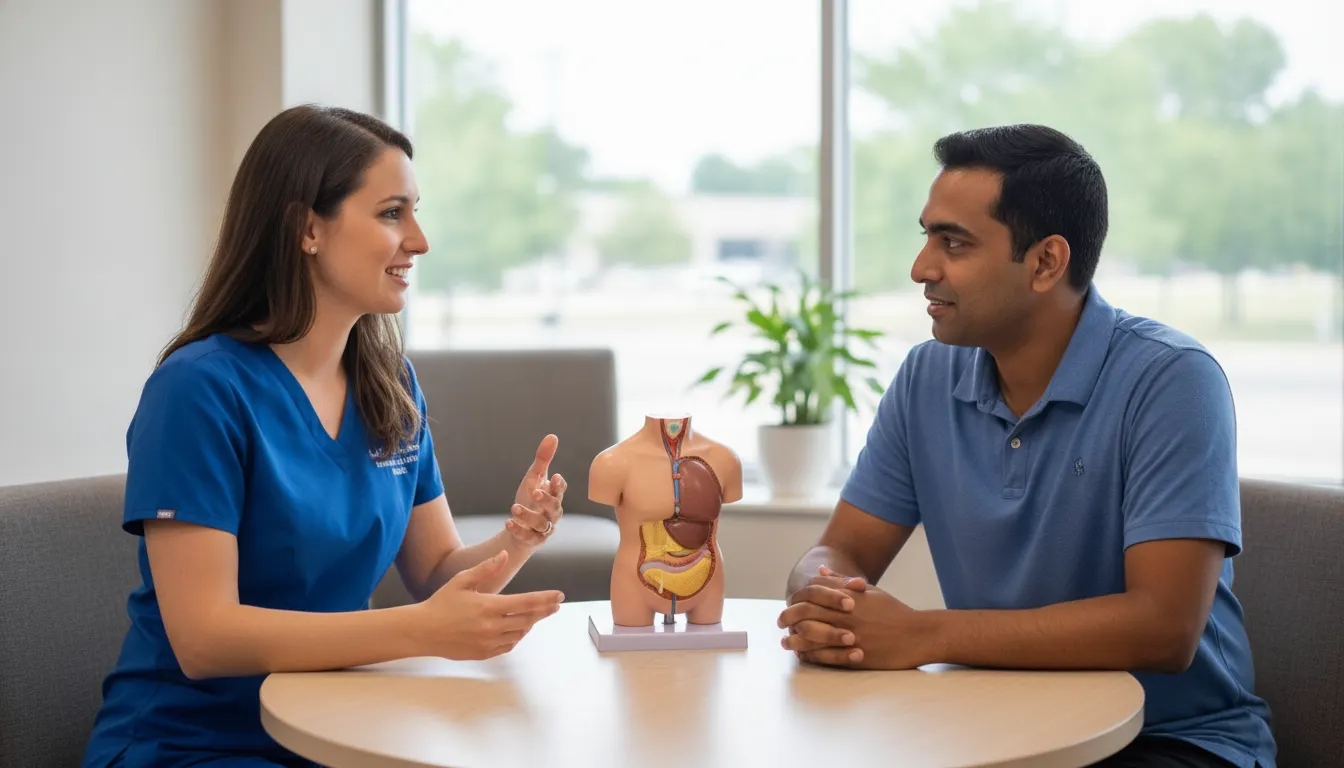
Food Poisoning Symptoms: When Omaha Patients Need Care
Food poisoning symptoms can start within hours or a few days after you swallow a germ in food. Many people improve with rest and small sips of fluid. Others need medical care for dehydration, blood in the stool, a high fever, or vomiting that will not stop. If you are in Omaha and the pattern is unclear, write down what you notice and contact a clinician before you wait it out.
Contact Nebraska Wellness Group
Monitor mild food poisoning symptoms only when you can keep fluids down and nothing is getting worse. Contact a clinician for bloody diarrhea, diarrhea lasting more than 3 days, fever over 102°F, vomiting that blocks fluids, or signs of dehydration. Call 911 for fainting, confusion, or trouble staying awake.
What food poisoning symptoms are most common?
The Centers for Disease Control and Prevention lists diarrhea, stomach pain or cramps, nausea, vomiting, and fever as the most common signs. Symptoms can be mild or severe. Some germs make people sick within a few hours. Others take a few days. The last meal you ate is not always the cause.
Timing alone cannot name the germ. Staphylococcus aureus can cause nausea and cramps within 30 minutes to 8 hours. Other germs, including some types of E. coli or Salmonella, may take longer. Similar symptoms can also come from a stomach virus, a medicine, or another illness. Do not decide the cause from a single meal.
Write down when symptoms began, how often you vomit or have diarrhea, whether you have a fever, and whether liquids stay down. Those details matter more than guessing which dish was responsible. Several people can share a meal and feel sick at different times.
Stomach cramps from a foodborne illness often come in waves and sit across the middle of the belly. Pain that is sudden, sticks in one spot, or keeps getting sharper needs a call even if nausea is mild. A low fever can occur with common symptoms. A temperature over 102°F is on the CDC list for seeing a doctor, so measure it rather than guessing from how warm you feel.
Vomiting once or twice, then keeping sips down, is different from vomiting that returns every time you drink. Diarrhea can be loose without being an emergency. Blood in the stool, black stool, or diarrhea that is still heavy after 3 days is not a wait-and-see pattern. If you are caring for a child, watch for fewer wet diapers, no tears when crying, or unusual sleepiness.
Which warning signs mean you should seek care?
The CDC says to see a doctor for severe symptoms. That list includes bloody diarrhea, diarrhea that lasts more than 3 days. A fever over 102°F, vomiting so often that you cannot keep liquids down, and signs of dehydration. Dehydration signs include urinating much less than usual, a dry mouth and throat, and feeling dizzy when you stand.
Use extra caution for a young child, an older adult, a pregnant person, or anyone with a weakened immune system. The CDC also says a pregnant person with fever and other flu-like symptoms should see a doctor, because some mild infections can affect a pregnancy. Contact a clinician early rather than waiting for every warning sign to appear.
Seek emergency care for fainting, confusion, trouble staying awake, or a sudden change that makes it unsafe to stay home. If someone may be in immediate danger, call 911. Do not wait for a routine appointment when those signs are present.
Most illnesses stay mild, but the CDC notes that some foodborne infections can lead to kidney damage, arthritis, or nerve problems. New weakness, reduced urine after bloody diarrhea, or symptoms that return after you seemed better are reasons to call. This article cannot diagnose those problems.
People sometimes mix this illness up with a respiratory flu. Fever and body aches can overlap, but food poisoning symptoms center on the stomach: nausea, vomiting, cramps, and diarrhea. Cough, sore throat, and a runny nose point somewhere else. If you mainly need help sorting flu symptoms, use the separate guide on flu symptoms and when to seek care. Do not use that page to decide whether bloody diarrhea or nonstop vomiting can wait.
Higher-risk groups should not use a neighbor’s recovery time as their plan. A healthy adult who drinks well and improves over a day is not the same as an infant. An older adult, or someone on medicines that affect kidneys or immune function. Pregnancy is its own reason to call about fever. When you phone, say who is sick and name the health conditions first.
How should you track hydration at home?
If you can drink, take frequent small sips of water or an oral rehydration solution. Large gulps may come back up. The CDC advises drinking plenty of fluids when you have diarrhea or vomiting, to lower the chance of dehydration. If you are unsure which fluid is right, ask a clinician or pharmacist.
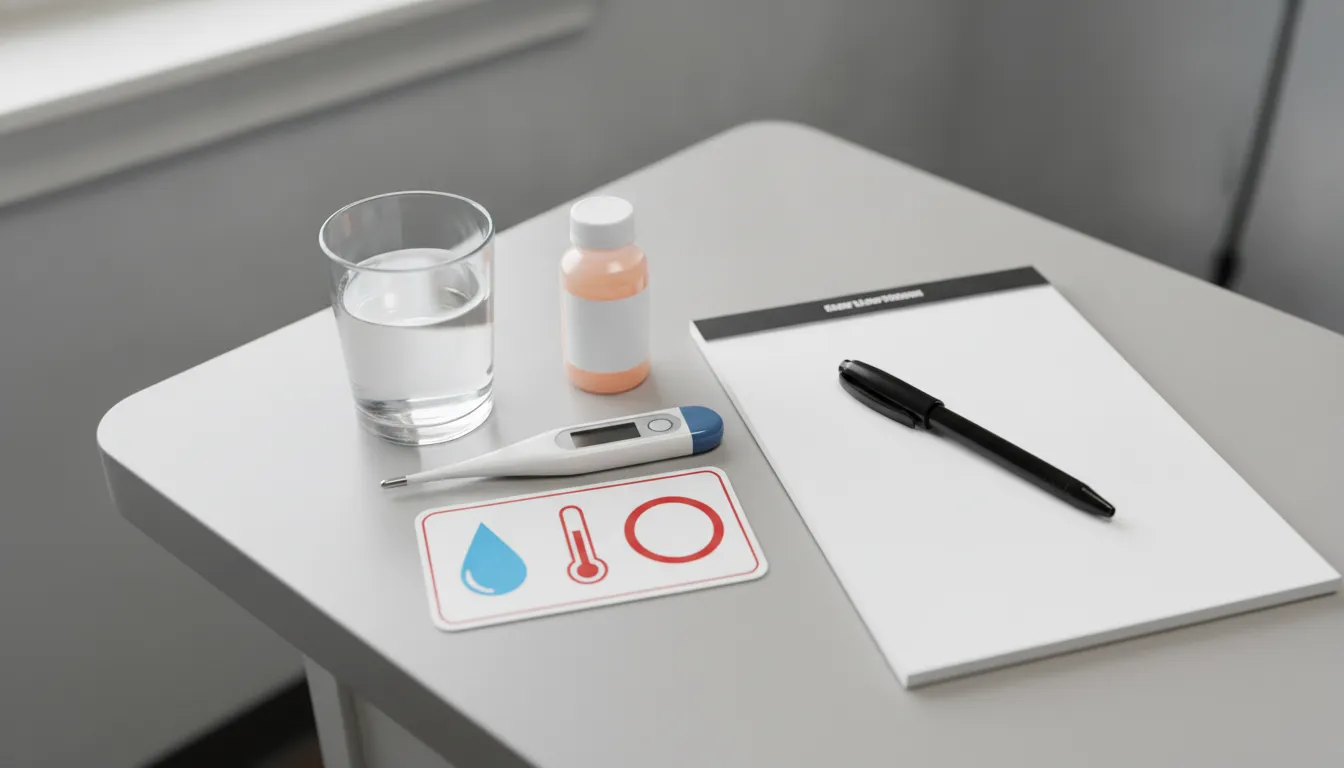
Keep a simple log. Note each drink, each episode of vomiting or diarrhea, any temperature, and how often you urinate. Rest helps, but rest does not replace that log. Stand up slowly if you feel weak. Stop home monitoring if liquids will not stay down, urine drops off, or dizziness gets worse.
Be careful with store medicines. Some products are not appropriate for children, pregnancy, bloody diarrhea, high fever, or severe pain. Do not use leftover antibiotics or someone else’s prescription. Ask before you take a medicine meant to stop diarrhea.
A useful home check takes about a minute each hour while symptoms are active. Look at three things: did the last sip stay down, has urine slowed, and is the person harder to wake than an hour ago? If all three are stable and there is no blood, no high fever, and no severe pain, keep watching. If any one of them changes for the worse, stop the home plan and call.
Oral rehydration solutions replace fluid and salts that plain water may not cover when diarrhea is heavy. They are not a treatment for bloody stool or a high fever. Sports drinks and sugary soda can upset the stomach further for some people. If you have heart, kidney, or fluid restrictions, ask before you choose a drink. Do not give a home mixture to an infant unless a clinician has told you the amounts.
- Sip fluids often, in small amounts, if you can keep them down.
- Write the time of each drink, vomit, loose stool, and temperature.
- Note urine, dizziness, mouth dryness, and whether symptoms ease or grow.
- Call a clinician if a CDC warning sign appears or you cannot replace fluids.
- Call 911 for fainting, confusion, or trouble staying awake.
What should you eat while food poisoning symptoms ease?
Once fluids stay down, try small amounts of familiar food. Bland foods are often easier. Stop if eating brings back vomiting or sharp pain. You do not need a full meal while nausea is active. Replacing fluid still comes first.
Skip alcohol while you are ill. Ask a clinician or pharmacist about oral rehydration drinks if vomiting or diarrhea is heavy, especially for a child, an older adult, or someone with another condition. Fluid limits differ from person to person.
Return to usual meals only as the whole pattern improves. One calm hour does not erase a new fever, rising pain, or diarrhea that starts again. Judge the direction across several hours, not a single break in symptoms.
How do home monitoring and urgent signs compare?
| Situation | What you may notice | A practical next step |
|---|---|---|
| Milder illness | Nausea, cramps, or loose stools, and you can still drink. | Rest, sip fluids, and keep a symptom log. |
| Dehydration risk | Liquids will not stay down, urine drops, dry mouth, or dizziness on standing. | Contact a clinician promptly. |
| CDC warning signs | Bloody diarrhea, diarrhea over 3 days, fever over 102 F, or nonstop vomiting. | Seek medical care the same day. |
| Emergency signs | Fainting, confusion, or trouble staying awake. | Call 911 or go to emergency care. |
This table is a general guide, not a diagnosis. You can get seriously dehydrated without matching every row. If you cannot tell how serious the illness is, call a clinician instead of relying on the chart alone.
What should you tell a clinician?
The CDC notes that the food that made you sick is often not the last thing you ate. Illness commonly starts 2 to 3 days later, and sometimes longer. A short record makes the visit more useful. Bring it with you or keep it by the phone.
- When symptoms began, and whether they are easing, steady, or worse.
- How often you vomit or have diarrhea, and whether you have seen blood.
- Any temperature, where pain sits, and whether pain is getting sharper.
- What you can drink, and how often you urinate.
- Pregnancy, health conditions, medicines, allergies, and recent travel.
- Meals, restaurants, and events from the past week, without blaming one dish.
Bring a current medicine list, including vitamins and nonprescription products. Say if anyone else who shared food got sick, and when their symptoms started. Keep receipts or packages if you still have them. Do not taste suspected food to test it.
Do not prepare food for other people while you are sick. Wash hands with soap and water after the bathroom and before you touch items others will use. Hand sanitizer does not replace soap and water for this kind of illness.
How can you avoid spreading illness at home?
Some foodborne germs spread from person to person. Wash hands with soap and water, clean bathroom surfaces, and do not share towels. Wash soiled clothes and linens using their care label. Keep sick people away from food prep until a clinician says it is reasonable to return.
After you recover, keep raw food separate from ready-to-eat food, clean surfaces, and chill leftovers promptly. Those habits do not explain today’s symptoms. They can protect the rest of the household later.
If a child is ill, an adult should supervise handwashing and cleanup. Ask a clinician before sending a child back to school, care, or group meals. A brief pause in symptoms is not the same as being ready to handle food for others.
When should Omaha patients call primary care?
Ask three questions. Can you keep fluids down? Are symptoms stable or improving? Is there a CDC warning sign, pregnancy, or a health condition that raises concern? Mild symptoms that let you drink and are easing can be watched. Persistent, worsening, or hard-to-manage symptoms need a call.
Do not wait for a set number of days if you cannot stay hydrated or you feel unsafe. A phone call can sort out the next step. It should not delay emergency care for someone who is faint, confused, or hard to wake.
For non-emergency questions, families can use primary care in Omaha as the contact point. You can review patient resources and accepted insurance before a visit. The practice phone is (402) 218-1242. Coverage and the right setting depend on your plan, so ask the office or your insurer if you are unsure. Billing questions can wait. Symptom questions should not.
You can also read who provides care if you want to know the team before you call. That page is background, not a symptom checker. If you need care the same day and cannot reach the office, use urgent or emergency care for the warning signs above rather than waiting overnight.
Emergency signs belong in emergency care. A question about fluids, medicines, or symptoms that linger can fit primary care. If you cannot tell which one applies, describe the symptoms and how severe they are. Lead with the most worrying sign, such as blood, a high fever, or the inability to drink.
Ask about non-emergency food poisoning symptoms
Frequently asked questions
How long do food poisoning symptoms last?
It depends on the germ and the person. Some illnesses settle within a day. Others last longer. Do not wait out bloody diarrhea, a fever over 102°F, diarrhea past 3 days, or vomiting that blocks fluids. Call sooner if you cannot drink or you are in a higher-risk group.
Should I make myself vomit after a suspect meal?
No. Do not try to cause vomiting. If you think you swallowed something harmful, contact a clinician or Poison Control at 1-800-222-1222 for advice about that situation. Keep product details if you have them. Do not test the food by eating more of it.
Can I pass food poisoning to someone else?
Some of these germs spread between people. Wash with soap and water, clean shared bathrooms, and stay out of the kitchen while you are ill. Ask a clinician when it is reasonable to cook for others again.
When is primary care the right call?
Primary care is a fit for symptoms that are not an emergency, especially if you are pregnant, older, very young, or unsure what to do. Severe warning signs and immediate danger need urgent or emergency care. If you are unsure, call and describe what is happening.
A practical next step
Food poisoning symptoms that stay mild and allow you to drink can be watched with a written log. Bloody diarrhea, a fever over 102°F, diarrhea past 3 days, vomiting that blocks fluids, or dehydration needs timely medical care. The CDC page on food poisoning symptoms is the public source for that warning list. When you are unsure, tell a clinician what you see and let them choose the next step.